Communication is a real profession, which, like all others, has its own codes and vocabulary of its own. So we decided to give you a little help in understanding these very singular words.
The goal of this little tutorial is to make it easier to read these communication tools in order to better understand the person who listens (or consults) and to improve your exchanges with creative teams, or customers.
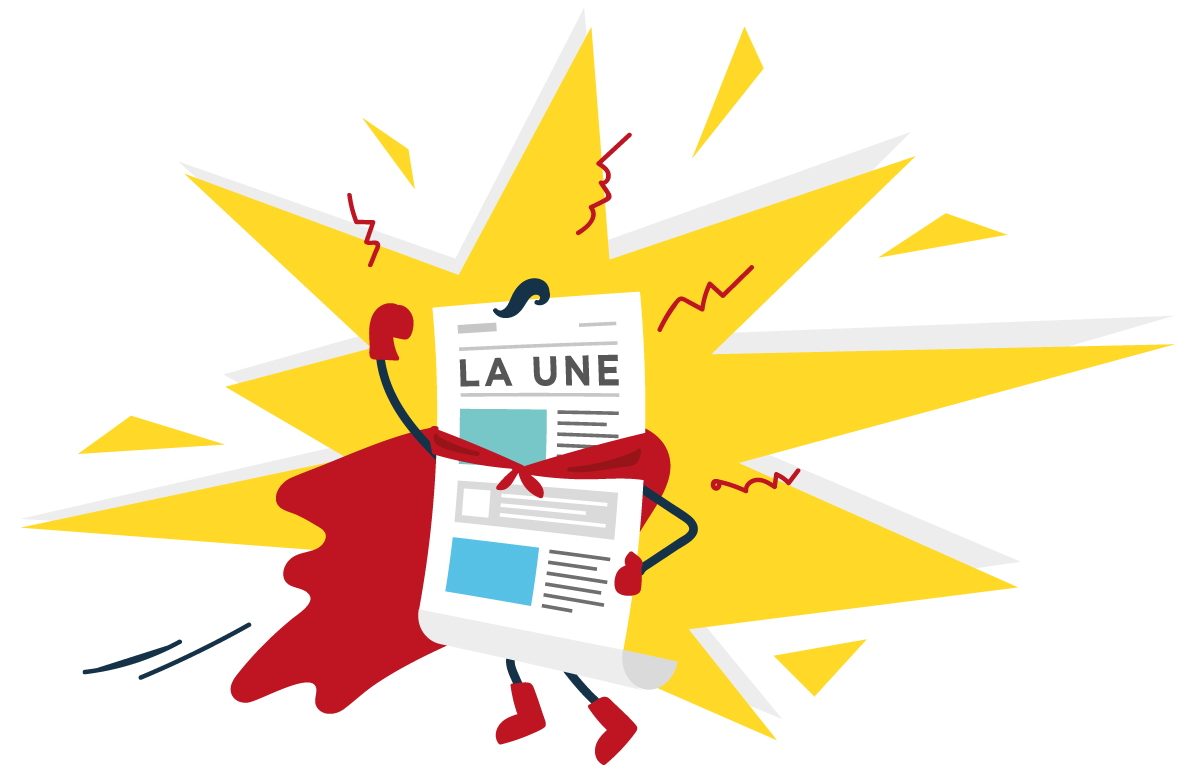
On the theory side, let's define this term a little before revealing its superpower. The newsletter (or in English ) can be compared to the village gazette of yesteryear: it is a valuable source of information, which tells the story of current events.
It can be used by a company, a brand or even an individual to unveil its latest news, announce the launch of a product or invite to an event/competition. Some also use it to make themselves known and expand their community.
Today, the newsletter has broadened its horizons, no longer focusing only on itself, but also on what is happening around it. In the midst of the flood of information in which we drown a little more every day, some companies have decided to stand out by offering niche news or news that goes against our news consumption habits (we can cite artips , brief.me or curaterz ).
The newsletter stands out from its friend the email (often spammy and not very creative), by its power, its ability to tell a story and its potential for deliverability.
Very ingenious tools make it possible to send personalized, creative and effective newsletters. Here are some of them:
- MailChimp , and its emblem of the little monkey postman;
- MailPoet , imagined by a super Quebecer, we talk about it here ;
- Infomaniak , which is starting to make its mark with a high-performance tool;
- Sendinblue , the newsletter that gets straight to the point;
- and many others, etc.
Because we're pretty knowledgeable about the subject, here are a few tips to make the most of the newsletter's superpower:
On the client side:
- Define your targets precisely : the newsletter allows you to target your audience as finely as possible according to the information you offer, so take advantage of it;
- Develop a clear message : a newsletter must include one, or even two themes at most so as not to lose its readers;
- Stand out by content or design. Your target probably gets hundreds of them a day, so you have to try to stand out from the crowd.
On the agency side:
- Establish a real strategy digital: the newsletter is not just an information tool, it can be used to improve your sales or win new customers;
- Do tests, In order to ensure good deliverability and reception on all media (desktop, mobile, etc.) and all email readers (Outlook, Gmail, Lotus, etc.), it is highly advisable to use a tool to check this regularly. We use Litmus which gives us complete satisfaction.
- Schedule frequent shipments , without being too intrusive: the goal is for people to remember your newsletter and to be impatient to receive the next one;
- Measure your results and use them, Thanks to the performance indicators present in the dedicated tools: this will allow you to make the newsletter more and more effective.
"Communication is about understanding the one who listens."
– John Abraham
And at Studio Cassette?
For us, the newsletter is a digital solution in its own right, which must be done according to the rules of the art: we start with the design (models) to finish with the technical part (HTML coding) and finally, the targeted and thoughtful sending.
The newsletter must be part of a real communication (or commercial) strategy and must have a specific objective. The goal is to reach our target (no pun intended) and to accomplish our initial objective.
We have produced newsletters for Kenzo Parfums, Givenchy and Roger Vivier. On this scale, it is essential to be rigorous and not to miss the boat!